

You can use riding mowers to clean up leaves in the fall and remove snow in the winter. If you have the right attachments and prepare a little, your NovorikX Zero-Turn Mower can help all year. It becomes a machine for yard care in every season. Here are some popular attachments:
| Attachment | Function |
|---|---|
| Lawn Sweepers | Pick up leaves and trash easily |
| Mulching Kits | Make clippings into mulch for better grass |
| Utility Cart | Carry mulch, dirt, or tools with less work |
Try these ideas and see how yard work gets easier!
Key Takeaways
- You can use riding mowers all year if you have the right attachments. They help clean up leaves in fall and remove snow in winter. Keep your mower in good shape by cleaning it often. Change the oil and check the blades to make sure it works well. Pick the right attachments for your mower, like baggers for leaves and snow blades for winter. This will help you work faster and better. Safety is very important. Always look over your mower before you use it. Follow safety rules to stop accidents when you work. Mulching leaves puts nutrients back into your lawn. Bagging leaves keeps your yard neat. Try using both ways for the best results.
Riding Mowers for Year-Round Yard Care
Types of Riding Mowers
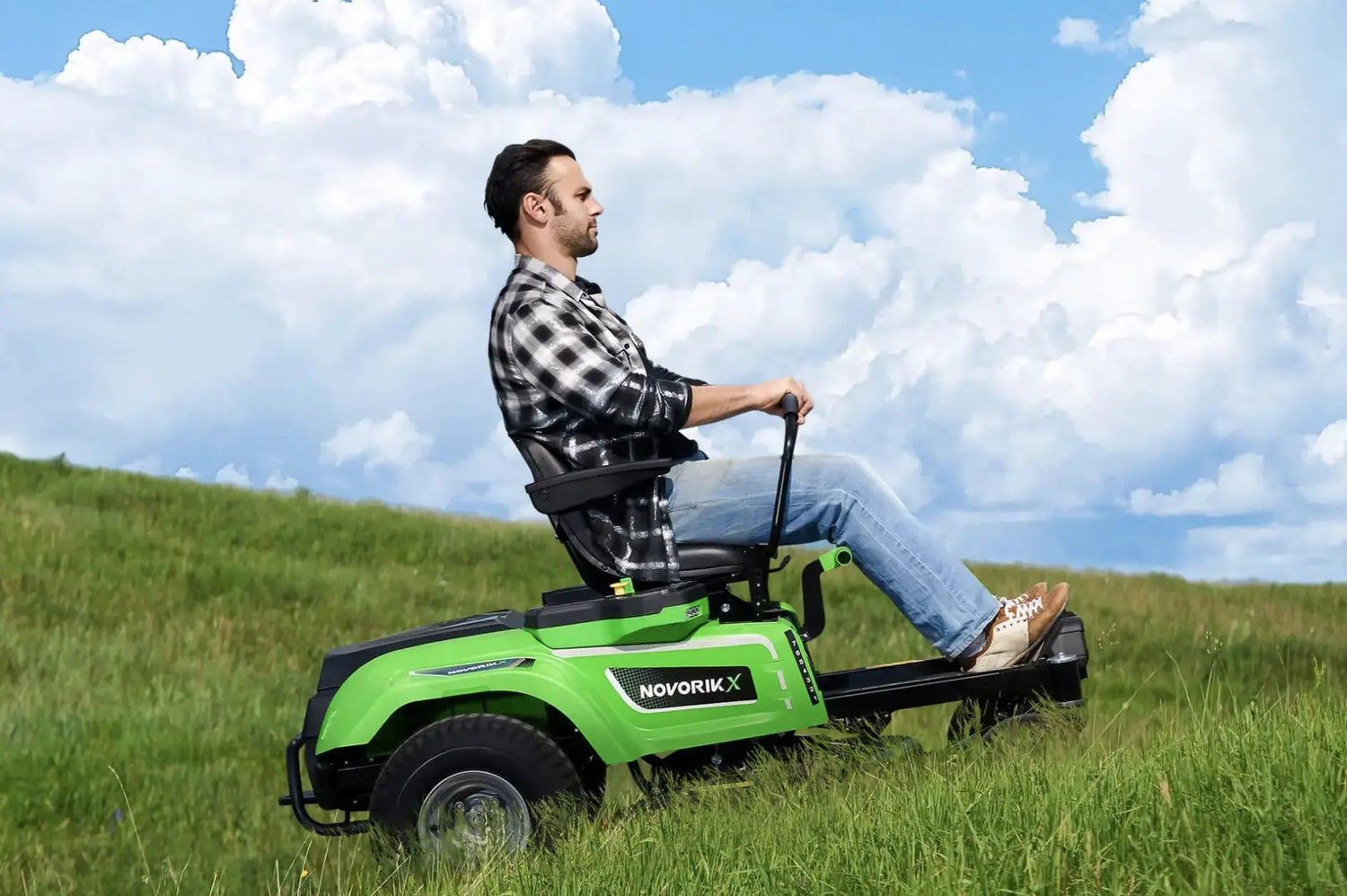
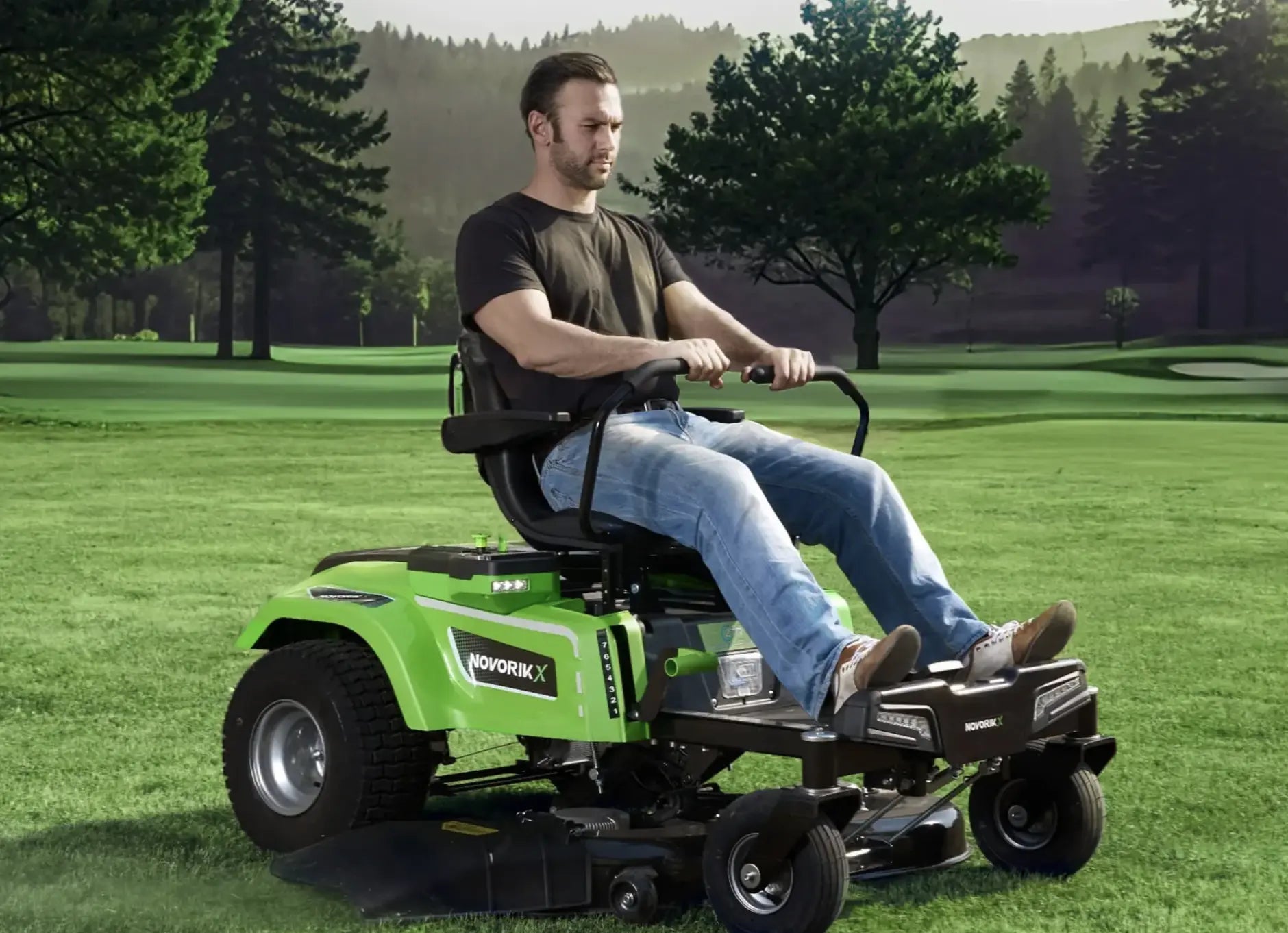
You have a lot of choices when it comes to riding mowers. Some models work best for big lawns, while others are perfect for tight spaces. Most riding mowers fall into two main groups: those with a longer cutting deck and those with a central deck. If you want to cover more ground quickly, pick a mower with a longer deck. Lawn tractors and garden tractors have a central deck, which can make turning harder. Zero-turn mowers, like the NovorikX Zero-Turn Mower, give you great control and speed. You can zip around trees and flower beds without missing a spot.
Key Attachments and Accessories
Attachments make your riding mower ready for any season. Here’s a quick look at what you can add:
| Attachment Type | Purpose |
|---|---|
| Snow Blower Attachment | Clears snow from driveways |
| Dozer Blade | Pushes snow in wide paths |
| Snow Cab Attachment | Shields you from wind and snow |
| Grass Catchers | Collects grass and leaves |
| Mulching Kit | Shreds leaves and returns nutrients to lawn |
| Collection System | Sweeps up leaves for easy cleanup |
You can use bagger systems to collect leaves and grass. Mulching kits chop up clippings and leaves, feeding your lawn and saving you time. Snow blades and blowers help you tackle winter storms. These accessories turn riding mowers into all-in-one yard machines.
Tip: Choose attachments that fit your mower model. Some work better with zero-turn mowers, while others fit lawn tractors.
Preparing Your Mower
Getting your mower ready for each season keeps it running strong. Start by cleaning the deck, cooling fins, and undercarriage. Change the oil and filter, and check the air filter. Replace spark plugs if needed. Drain or stabilize fuel before winter. Take care of the battery and sharpen the blades. Inspect belts, cables, and pulleys. Grease fittings and check bearings. Look at the tires and fluid levels. Make sure everything is in good shape before you start.
- Remove leftover fuel to avoid issues in cold weather.
- Clean and inspect your mower to prevent rust.
- Drain oil and replace spark plugs for a fresh start in spring.
Riding mowers like the NovorikX Zero-Turn Mower make these steps easy. With the right care and accessories, you can handle leaves in autumn and snow in winter without breaking a sweat.
Autumn Leaf Cleaning Steps
Prepping the Lawn and Mower
Want your leaf cleanup to go smoothly? Start by walking your yard and picking up sticks, rocks, and toys. These items can damage your mower or get stuck in the blades. Next, check your mower’s blades. Sharp blades cut leaves better and help the collection system work well. If you have mulching blades, use them for the first pass. They chop leaves into tiny pieces and help your lawn stay healthy.
Here are some ways to get your lawn and mower ready:
- Use blades with wings to create strong suction. This helps pull leaves into the collection tube.
- Try mulching blades to chop leaves into small bits. These bits can feed your grass and reduce the need for bagging.
- Make one pass with mulching blades, then a second pass with a bagger to pick up the mulched leaves.
- Remove any large piles of wet leaves. Wet leaves can clog your mower and make the job harder.
Mulching mowers recycle leaves and grass clippings. This returns nutrients like nitrogen and potassium to your soil. Your lawn will look better and need less fertilizer.
Using a Bagger or Mulcher
You have two main ways to handle leaves: bagging or mulching. Each method has its own benefits.
- Mulching chops leaves into tiny pieces. These pieces break down and feed your lawn. Mulching helps your soil hold moisture and keeps your grass healthy. It also saves time because you do not have to empty bags.
- Bagging collects leaves in a bag or bin. This keeps your yard looking neat and helps prevent lawn diseases. Bagging works well if you have lots of leaves or want a super clean look.
Many people like to mulch first, then bag what is left. Studies show that mulching and bagging both keep your lawn healthy. Mulched areas often have more nutrients in the soil. Bagging can lower some nutrients, but your grass will still look good.
If you want to help the environment and save money, mulching is a great choice. It adds nutrients to your lawn and cuts down on yard waste.
Tip: If you have a lot of leaves, use a double bagger. This lets you collect more before stopping to empty the bags.
Safety and Maintenance Tips
Safety comes first when you use riding mowers for leaf cleanup. Here is a table with important safety tips:
| Safety Precaution | Description |
|---|---|
| Slope Management | Do not tow on slopes over 5 degrees. Go up and down slopes, not across. |
| Speed Control | Slow down when going downhill. This helps you stay in control. |
| Terrain Awareness | Watch for holes, rocks, or hidden objects. These can tip your mower. |
| Gradual Movements | Make slow, steady turns. Avoid sudden stops or sharp turns. |
| Full Collection System | When the bag is full, park on a flat spot and turn off the engine to empty. |
After you finish, clean the mower deck and collection system. This keeps your mower working well and stops rust. If you plan to store your mower for winter, drain the fuel or add a stabilizer. Check the battery and store it in a dry place.
Troubleshooting Leaf Collection
Sometimes, leaf collection does not go as planned. Here are some common problems and how to fix them:
| Step | Description |
|---|---|
| Check for clogs | Make sure the bag and tubes are not blocked. Good airflow is important. |
| Maintain blade condition | Keep blades sharp. Dull blades do not lift leaves well. |
| Adjust cutting height | Do not cut too much grass at once. Raise the deck if needed. |
| Raise cut height | Cutting too low can block airflow. Try a higher setting. |
| Clean cutter deck | Remove any stuck leaves or grass from under the deck. |
| Avoid wet conditions | Wet leaves clump together and are hard to collect. Wait for dry weather. |
If you follow these steps, you will get better results with your riding mowers. You will spend less time fixing problems and more time enjoying a clean yard.
Winter Snow Removal with Riding Mowers
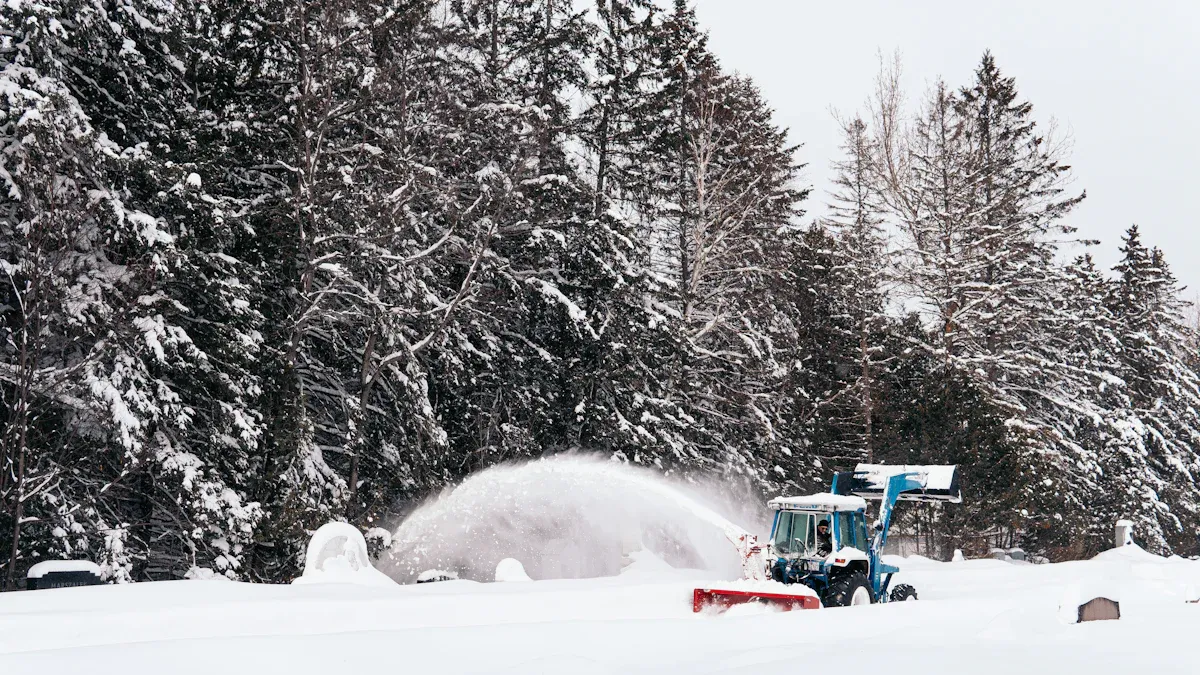
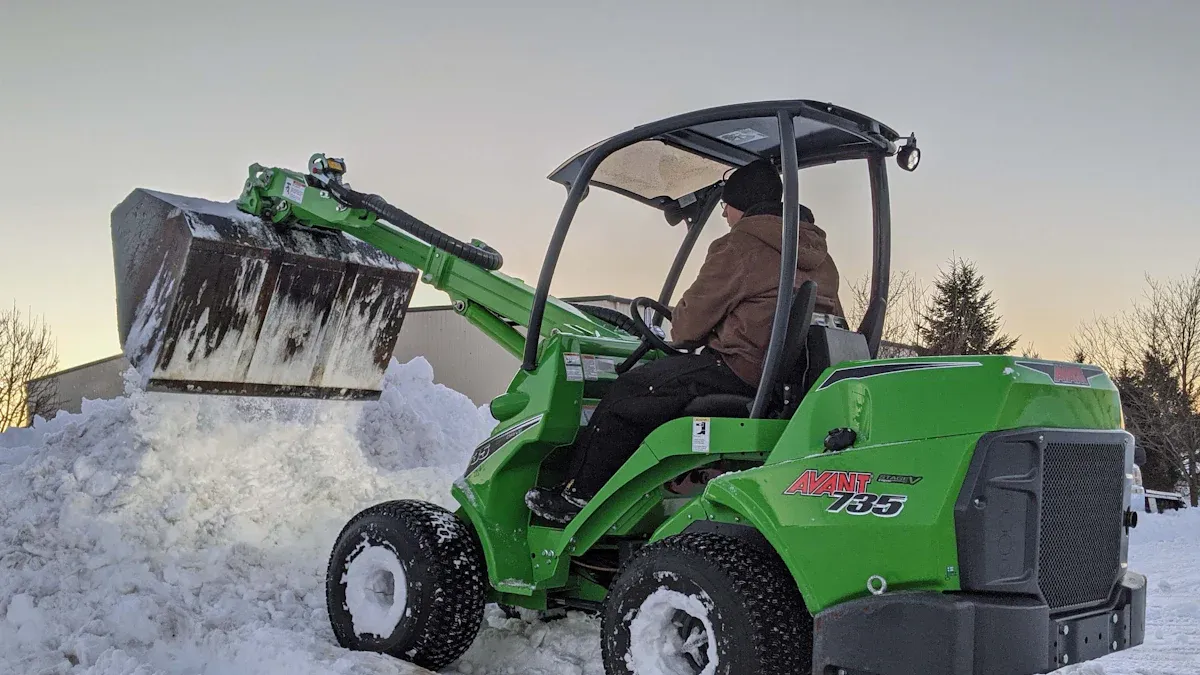
Winter brings a new set of challenges for your yard. You might think your mower is only for grass, but it can help you clear snow, too. With the right setup, you can turn your mower into a snow-moving machine. Let’s walk through how you can get ready for winter, use your mower safely, and solve common problems.
Installing Snow Attachments
Before you start, make sure your mower is on a flat surface and the engine is cool. Lay out all the parts for your snow plow or loader. Here’s a simple step-by-step guide to help you install a plow attachment:
- Place your mower in park and turn it off.
- Remove the mower deck if needed. This gives you space for the plow.
- Attach the mounting plates with hex screws.
- Secure the large plate flange.
- Install the ‘H’ bracket using clevis pins.
- Mount the front bracket with carriage bolts.
- Swing the ‘H’ bracket up and lock it in place.
- Insert flange bearings into the front mount bracket.
- Attach the plow assembly.
- Secure the lift handle and lock cable.
- Connect the pivot release cable.
- Attach the control handle to the pivot assembly.
- Feed the upper control arm through the ring and secure it.
- Mount cable levers and install the handle grip.
- Use zip ties to keep cables neat.
- Tighten all cables and test the controls.
Tip: Installing a plow can take time. Removing the mower deck is often the hardest part, but it’s important for a good fit.
Snow Plowing Steps
Now you’re ready to clear snow. Start slow and check that your plow moves up and down easily. Here are some tips for efficient plowing:
- Make sure your mower has enough horsepower. At least 20 horsepower works best for snow.
- Use tire chains and rear weights. These help your mower grip the ground and push snow.
- Clear snow in layers if it’s deep. Don’t try to move all the snow at once.
- Riding mowers work well for snow up to 6-8 inches deep. For bigger storms, you may need a heavy-duty plow.
- Move snow in straight lines. Push it to the edge of your driveway or walkway.
- Watch for ice patches. Go slow to keep control.
Note: Snow can be heavy. One cubic foot can weigh up to 20 pounds. Don’t overload your mower.
Safety for Winter Use
Winter weather can be tough. Stay safe with these tips:
| Safety Tip | Why It Matters |
|---|---|
| Wear cold weather gear | Protects you from frostbite and hypothermia |
| Go slow | Keeps you in control on slippery surfaces |
| Take breaks | Prevents fatigue and keeps you alert |
| Keep gloves on | Stops your skin from sticking to cold metal |
| Use extra lighting | Helps you see in the dark or during snowstorms |
| Store your mower inside | Protects it from ice and snow damage |
| Check your mower before use | Finds problems before they become serious |
Tip: Always inspect your mower before you start. Look for loose parts, low tire pressure, or worn cables.
Troubleshooting Snow Removal
Sometimes things don’t go as planned. Here are common problems and how you can fix them:
- Attachments make your mower wider. Watch out for tight spaces and obstacles.
- Plowing puts stress on your engine and transmission. If you hear strange noises, stop and check your mower.
- Removing the mower deck can be a hassle, but it’s needed for most plow setups.
- If your mower gets stuck, add more weight to the back or use tire chains.
- For snow deeper than 12 inches, clear it in layers or use a bigger plow.
- If your plow doesn’t move smoothly, check the cables and mounting points.
- After plowing, clean your mower. Remove snow, dirt, and salt to prevent rust.
- Inspect belts, blades, and the deck for damage. Change the oil and add fuel stabilizer.
- Charge the battery and store it in a dry place when you’re done for the season.
Remember: Riding mowers are great for light to moderate snow. Don’t push them too hard, and they’ll last for many winters.
Comparing Mower Types and Attachments
Zero-Turn vs. Lawn Tractor
You might wonder which mower works best for year-round yard care. Zero-turn mowers, like the NovorikX, turn quickly and handle tight spots with ease. You can zip around trees, flower beds, and obstacles without missing a patch of grass or leaves. Lawn tractors move more slowly and require more space to turn. They work well for big, open yards but can struggle in small or crowded areas.
Here’s a quick comparison:
| Feature | Zero-Turn Mower (e.g., NovorikX) | Lawn Tractor |
|---|---|---|
| Turning Radius | Very tight (zero) | Wide |
| Speed | Fast | Moderate |
| Maneuverability | Excellent | Good |
| Best For | Complex lawns, obstacles | Large, open lawns |
| Leaf/Snow Attachments | Many available | Many available |
Tip: If you want speed and control, go with a zero-turn mower. If you have a huge, flat yard, a lawn tractor might work for you.
Choosing the Right Accessories
You need the right tools for the job. Not every attachment fits every mower. Zero-turn mowers often use special mounts for baggers, mulchers, and snow blades. Lawn tractors use different brackets and connections. Always check your mower’s manual before buying an accessory.
Here’s what to look for:
- Match the attachment to your mower model.
- Choose heavy-duty parts for snow removal.
- Pick a double bagger for lots of leaves.
- Use tire chains and weights for winter traction.
Note: NovorikX Zero-Turn Mowers support a wide range of accessories, making them a smart choice for all seasons.
Cost and Maintenance
You want to know what you’ll spend and how much work you’ll do. Zero-turn mowers usually cost more up front, but they save you time. You finish yard work faster and use less fuel. Attachments add to the price, so plan your budget.
Maintenance matters, too. Keep blades sharp, check belts, and clean the deck after every use. Store your mower and accessories in a dry place. Regular care keeps your machine running for years.
| Item | Zero-Turn Mower | Lawn Tractor |
|---|---|---|
| Price | Higher | Lower |
| Maintenance | Simple | Simple |
| Attachment Cost | Varies | Varies |
Remember: Investing in quality saves you money and hassle in the long run.
Using your riding mower for both leaf cleanup and snow removal saves you time and effort all year. You get a cleaner yard in the fall and a clear driveway in winter. Try these tips for easy, efficient yard care:
- Use the right attachments for each season
- Keep your mower clean and well-maintained
- Always follow safety steps
Want more power and flexibility? Check out the NovorikX Zero-Turn Mower for a smoother yard care experience!
FAQ
Can I use my NovorikX Zero-Turn Mower in the snow?
Yes, you can! Just add a snow blade or blower attachment. Make sure you use tire chains for better grip. Always check your manual for the right setup.
What attachments do I need for leaf cleanup?
You need a bagger or mulching kit. A double bagger works best for lots of leaves. Mulching blades chop leaves into tiny pieces. Both options keep your yard tidy.
How do I keep my mower safe in winter?
Store your mower in a dry place. Remove the battery and keep it indoors. Clean off all snow, salt, and dirt after each use. This helps prevent rust and damage.
What should I do if my mower gets stuck in snow?
Try adding more weight to the back. Use tire chains for extra traction. If you still get stuck, clear snow in smaller layers. Don’t force the mower—it can damage the machine.
How often should I sharpen the blades?
Check your blades every 20-25 hours of use. Sharpen them if you see dull edges or missed spots. Sharp blades make leaf collection and mowing much easier.

Leave a comment
This site is protected by hCaptcha and the hCaptcha Privacy Policy and Terms of Service apply.